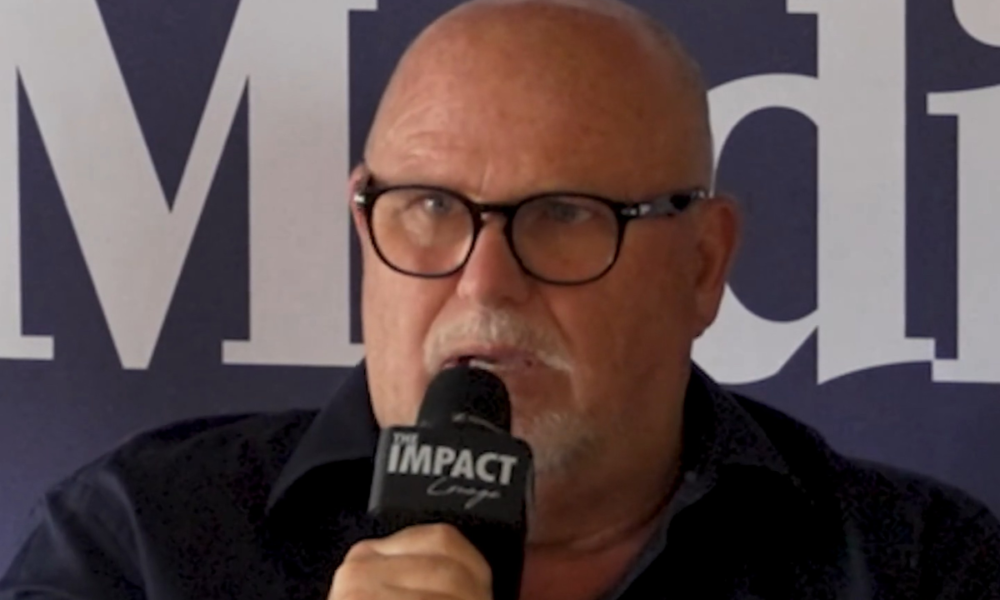
There is a question that quietly separates the brands winning in entertainment from the ones still chasing it. For years, marketers walked into Hollywood asking, “How do we get our brand into a Netflix project?” At this year’s Cannes Lions, Mediaplacement CEO Britt Johnson, alongside Laura Dyer, SVP of Global Marketing at SharkNinja, and Magno Herran, VP of Global Brand and Partnership Marketing at Netflix, made the case that this is the wrong question entirely. The right one is simpler and far more demanding: where does our brand actually belong?
That shift in framing changes everything that follows. It moves the conversation away from forcing a logo into a scene and toward finding the places where a brand can live so naturally that the audience never feels sold to. In a moderated conversation led by Ankler Media’s Natalie Jarvey, the panel laid out a modern playbook built on three ideas that work together: belonging over intrusion, investment discipline that treats every placement like a real business decision, and a two-part creative philosophy that pairs seamless integration with unapologetically disruptive campaigns. This is what that playbook looks like in practice, and why it matters for any brand trying to show up in culture right now.
Belonging Beats Intrusion
The starting point is respect for the audience. Today’s consumer, and not only Gen Z, can sense when something is inauthentic from a mile away. The fastest way to lose them is to force a message into a story where it does not fit. That is why the panel kept returning to the idea that this space is almost sacred. Writers, producers, and studios are more open to brands than they have ever been, and audiences are leaning back in, heading to theaters and streaming constantly. That rare combination of creative willingness and renewed attention is a gift, and squandering it with a clumsy placement is the one unforgivable mistake.
Belonging means the audience should want a product because they were entertained, not because they were advertised to. The clearest illustration is a moment that has nothing to do with appliances at all. Picture a premium whiskey sitting on the bar of a ranch in a hit drama. You watch the characters you have come to love, and for a second you want to live in their world. Suddenly you want the whiskey too. Nobody sold it to you. You simply wanted in. That is the feeling brands should be chasing, the buzz of discovery rather than the friction of an ad. The goal is for someone to see a product on screen, whether it is a beauty device, a frozen-treat maker, or anything else, and think, “That’s cool, I want that.”
Getting there requires a model built on patience instead of pressure. Rather than paying a large fee upfront and demanding a product appear in five scenes, the better approach is to offer the product organically and risk-free. A brand sends the product, and maybe it makes the cut and maybe it does not. The rule that keeps the whole thing honest is that nobody should want it to make the cut if it does not feel real. If a scene lands naturally, then the partners can amplify it at the moment of release. If it does not, there is no harm done and no pressure applied. That restraint is exactly what makes the eventual placement believable.
Treat Every Placement Like a Real Investment
If the first pillar is creative discipline, the second is financial discipline. One of the biggest changes in entertainment partnerships is that they are no longer a leap of faith. As Mediaplacement CEO Britt Johnson put it, the old way was essentially to give a box of product to the set and hope for the best. There was no real way to know in advance what a placement would be worth or whether the spend made sense.
That has changed dramatically. Brands can now calculate in advance what these opportunities are likely to be worth, what they should be spending to capture them, and what kind of return to expect. Just as importantly, they can map how to build around a placement and secure as much runway as possible so a single moment can be developed into a full campaign rather than a one-off blink on screen. Runway is the operative word. The brands that win are the ones that know about an opportunity early enough to plan, to align their media, and to prepare the activations that will carry the moment forward.
Data is a growing part of that discipline. Forward-looking brands are building internal tools, including AI systems that can take the name of a celebrity or property and score its fit to the brand, weighing potential risk against potential reward before delivering a recommendation. But data only carries a decision so far. At some point a marketer still has to make a gut call and decide to go for it, often backed by a trusted relationship with a studio and the confidence that any complications will get resolved on the back end. The smartest teams treat it as a mixture of data and instinct, the way most good decisions get made. The point is not to remove judgment from the process, but to make sure that judgment is informed, measured, and tied to a real understanding of value and return.
Seamless Integration, Disruptive Campaign
The third pillar is the creative philosophy that ties the other two together, and it has two distinct halves. The first half is the integration itself, which should be seamless and authentic. To make that possible, brands increasingly surrender creative control to the people who know the story best, the writers, showrunners, and directors who can weave a product into a scene in a way that stays true to the characters. When a product appears because it genuinely belongs in a character’s world, the audience accepts it without a second thought.
The second half is what happens after the integration, and here the philosophy flips. Once a product is living authentically inside a show, the campaign built around it should be as disruptive as it can possibly be. The integration earns trust quietly; the campaign then uses that trust to make noise. This is the part where a brand gets to step outside its usual lane, take creative risks, and create the kind of content people actually want to share. The worst thing a brand can be in this environment is too safe and boring, because safe and boring gets ignored. The content has to be interesting, shareable, and genuinely talkable, the kind of thing that makes someone stop and say, “Did you see this?”
The benchmark for that kind of disruption is the Barbie summer effect. The aspiration is a moment so culturally magnetic that people are wearing the colors, showing up to the activations, and rolling into your event because they want to be part of it and share it with their friends, followers, and fans. That is the difference between a placement and a movement. A placement is something an audience sees. A movement is something they join.
Bringing It Together
What makes this playbook powerful is that the three pillars reinforce one another. Belonging earns the audience’s trust. Investment discipline ensures the brand picks the right moments and has the runway to build on them. And the two-part creative philosophy turns a single authentic placement into a campaign that travels far beyond the screen, into social feeds, influencer content, live events, and real-world experiences where fans can actually touch and feel the brand.
For any company trying to show up in entertainment today, the lesson is clear. Stop asking how to get in. Start asking where you belong, then back that answer with real planning, real measurement, and the creative courage to be disruptive once you have earned the right. The brands that get this right are not interrupting the story. They are becoming part of it, and giving audiences a reason to want what they are watching.
Watch the full Cannes Lions panel above to hear Britt Johnson, Laura Dyer, and Magno Herran break down the new playbook for entertainment partnerships in their own words.